
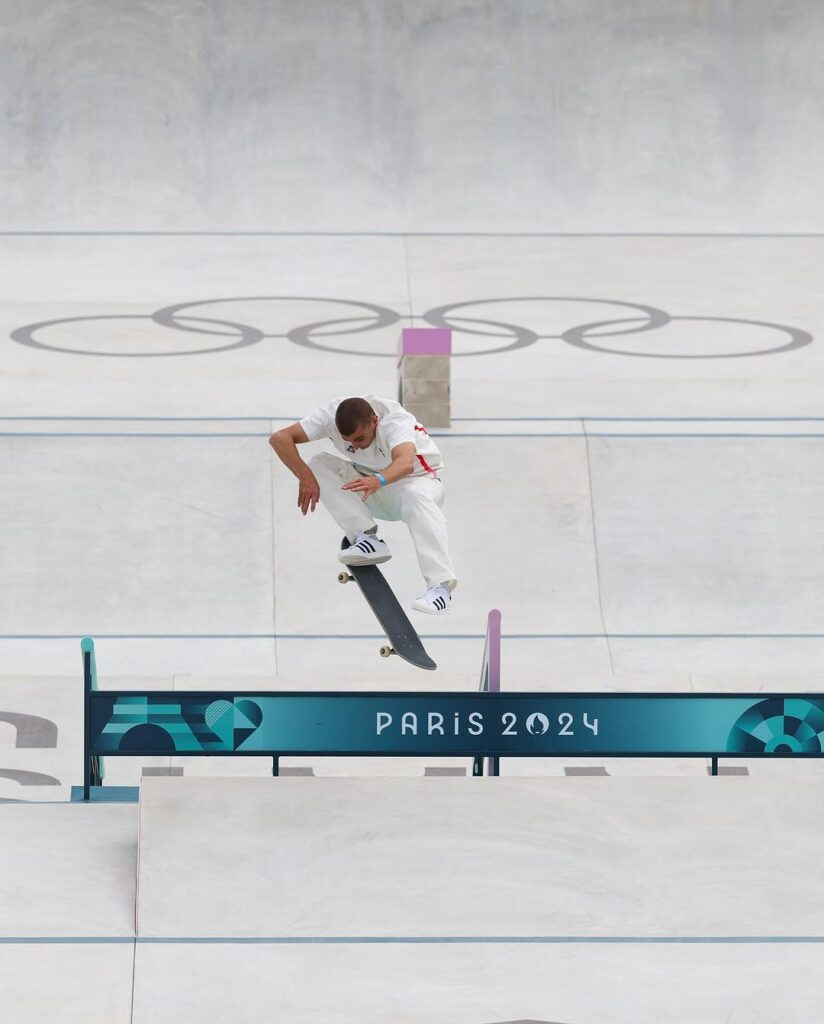
Skateboarding has always been, from its origins, a manifestation of street culture, a form of artistic expression, and an attitude toward life that rejects traditional conventions. This sport—or lifestyle, as its practitioners prefer to call it—made its Olympic debut at the Tokyo 2020 Games. Now, it is preparing for its second appearance at the Paris 2024 Olympics. This event has sparked a mix of emotions and opinions among skaters and the skateboarding community at large. In this essay, we will explore the roots of this resistance, the impact of skateboarding’s inclusion in the Olympics, and what it means for the future of this unique discipline.
The Origins of Skateboarding and Its Street Philosophy
From its beginnings, skateboarding has been a manifestation of freedom and creativity. It emerged when surfers modified their boards to glide on asphalt, adapting their passion to a new environment. Over time, it became a cultural movement that goes beyond mere sport.
More than a discipline, skateboarding is a lifestyle that develops anywhere there’s space to roll and create. Streets, squares, parks, and urban corners have witnessed its evolution. What defines skateboarding is not just technical skill, but its street character, its spirit of self-management, and its rejection of rules imposed by traditional institutions.
Skateboarding in the Olympics
The inclusion of skateboarding in the Olympic Games marked an important milestone. For many, this recognition represented an opportunity to show the world the talent and dedication of skaters. The Tokyo 2020 Games provided an unprecedented global platform, allowing the best skaters to compete and share their passion with a wider audience.
However, its entry into the Olympic realm also generated controversy. The main concern is that by becoming an Olympic sport, skateboarding could lose its rebellious essence and its connection to street culture. Many skaters believe that official competitions, with their strict rules and formal structures, do not reflect the true spirit of skateboarding, which is more anarchic and spontaneous. Moreover, the commercialization of the sport could lead to a “domestication” of skate culture, where brands and sponsors dictate trends rather than the skaters themselves.
The Resistance of the Skateboarding Community
The future of skateboarding will depend on the community’s ability to adapt without losing its essence. The key lies in maintaining a balance between professionalization and the creative freedom that has always characterized this world. While the visibility and resources brought by Olympic inclusion can be beneficial, it is essential that skaters remain the ones setting trends and shaping the evolution of the sport.
Skateboarding does not have to lose its authenticity with its entry into the Olympics, as long as the community continues to foster its street spirit, independent character, and diversity. The coexistence between competitive skateboarding and street skateboarding is possible, and in fact, it can enrich skate culture even further. The true test will be how skaters themselves decide to influence this change and ensure that skateboarding remains what it has always been: an expression of creativity, identity, and limitless passion.
For Skateboarding to Evolve Without Losing Its Essence
Skateboarding in the Olympic Games reflects the evolution of the sport and its culture. While some fear that this evolution could lead to a loss of identity, others see an opportunity for skateboarding to reach new heights. Ultimately, the success of this integration will depend on how the skateboarding community chooses to navigate these changes.
At the end of the day, skateboarding has always been and will continue to be a form of self-expression and freedom. Whether on the streets or in Olympic stadiums, what matters is keeping alive the passion and spirit that have defined skateboarding from the beginning. It is an exciting time to be part of this culture, and the future—with its challenges and opportunities—promises to be as dynamic and surprising as the sport itself.